


Life can feel like a never-ending storm of tasks and digital distractions. Do you ever feel like your mind is racing while your body is still? Finding peace in the chaos might seem impossible, but it’s simpler than you think.
Learning how do you practice mindfulness is a journey that starts with a single breath. It’s not about stopping your thoughts completely. It’s about being fully present without judging yourself.
Spending just a few minutes each day on mindfulness can reduce stress and improve your focus. Starting small is key to creating a lasting habit that boosts your emotional health. You deserve to feel grounded, even when life gets busy.
Key Takeaways
- Mindfulness acts as a powerful tool to lower daily stress levels.
- Focus improves significantly when you remain present in the current moment.
- Emotional well-being flourishes through consistent, small daily habits.
- You do not need special equipment to begin your journey today.
- Acceptance without judgment is the core foundation of this practice.
Understanding the Core Principles of Mindfulness
You might think practicing mindfulness means having a completely blank mind. But, it’s actually more about being present in your daily life. It’s not about stopping your thoughts or getting rid of worries.
Instead, mindfulness is about observing your thoughts and feelings without getting caught up in them. You just notice what’s happening right now, without judgment.
Defining Mindfulness in Your Daily Life
As Alexa Bonacquisti, PhD, PMH-C, says, the heart of mindfulness is noticing your inner state without criticism. This way, you stop fighting your feelings.
You start to see your thoughts as fleeting clouds, not as absolute facts. This change helps you stay calm, even when things get tough.
The Science Behind Why Mindfulness Works
The benefits of mindfulness practice come from how it changes your brain under stress. It strengthens the prefrontal cortex, which handles your thinking and emotions.
By focusing on the present, you get better at staying calm in tough times. This also boosts your memory and sharpens your focus over time.
In the end, the benefits of mindfulness practice go beyond just relaxing. By consistently practicing, you build a strong mind that can handle life’s challenges.
How Do You Practice Mindfulness in Your Daily Routine
Starting your mindfulness journey is like training for a marathon. It’s all about consistency, not how hard you try. You might wonder how to fit mindfulness into your busy life. The answer is small, easy steps that blend into your day.
Setting Realistic Expectations for Beginners
Many people give up because they try to meditate for too long on their first day. Instead, focus on the quality of your attention. Studies by neuroscientist Amishi Jha show that just 12 minutes of meditation, 5 days a week, can greatly improve your focus.
This method shows the real value of mindfulness. Short sessions help you build a lasting skill, not just a quick fix.
Creating a Dedicated Space for Your Practice
Your environment is key to success. Having a special spot for mindfulness sends a clear message to your brain. It’s time to calm down.
You don’t need a fancy space. A simple chair or a small cushion works great. The goal is to create a consistent trigger to help you shift from busy to calm. Consistency is the key to your progress.
| Common Pitfall | Effective Strategy | Expected Outcome |
|---|---|---|
| Irregular sessions | Daily 12-minute blocks | Improved focus |
| Distracting environment | Dedicated quiet space | Faster relaxation |
| High pressure goals | Small, steady steps | Long-term habit |
Morning Rituals to Center Your Mind
A peaceful morning is key to a successful daily mindfulness practice. Starting your day with purpose helps shield you from stress. It’s the best time to connect with your energy.
Mindful Breathing Upon Waking
Begin by settling into your body before getting out of bed. Find a comfy spot or just relax while feeling your body. This pause helps you stay present.
Try this simple sequence to wake up your senses:
- Take three deep, intentional breaths, feeling your lungs expand fully.
- Notice the temperature of the air and the texture of your sheets.
- Release any lingering tension in your shoulders or jaw.
“The way you spend your morning can often tell you what kind of day you are going to have.”
Setting Intentions Before Checking Your Phone
Most people grab their phones as soon as they wake up. This puts your brain in a reactive state. Delaying this habit keeps your mind clear and focused on your needs.
Think about what kind of day you want. Do you want to be patient, creative, or focused? Holding onto this thought guides you. This daily mindfulness practice helps you stay in control, even when things get busy.
Mindfulness Techniques for the Busy Professional
Adding small moments of peace to your day can change how you deal with stress. Even with a tight schedule, practicing mindfulness is key to staying calm. You don’t need a lot of free time to feel more focused and relaxed.
The Five-Minute Desk Meditation
You can add mindfulness exercises to your day without leaving your desk. The STOP method is a great mindfulness technique for busy afternoons.
To use it, Stop what you’re doing, Take deep breaths, Observe your surroundings and feelings, and Proceed with purpose. This short break can stop burnout and help you control your reactions.
Practicing Mindful Listening During Meetings
Meetings can be distracting, but they’re also a chance for mindfulness meditation. Instead of thinking about your response, listen fully to what’s being said.
Listening fully to the speaker improves teamwork and reduces conflict. It helps you stay present and respond thoughtfully, rather than reacting impulsively.
| Technique | Primary Benefit | Time Required |
|---|---|---|
| STOP Method | Emotional Reset | 1 Minute |
| Desk Meditation | Stress Reduction | 5 Minutes |
| Mindful Listening | Improved Focus | Duration of Meeting |
Integrating Mindfulness into Your Physical Activity
Making your movement a meditation breaks you free from autopilot. You don’t need to sit still to feel deeply aware. By focusing differently, any activity can become a grounding experience that keeps you present all day.
Mindful Walking and Sensory Awareness
Walking is perfect for mindfulness because it’s natural and rhythmic. Instead of daydreaming, focus on your body as you move. Feel your feet touching the ground and how your weight shifts with each step.
Pay attention to your surroundings to sharpen your senses. Listen to the sounds around you and notice the colors and textures. This practice keeps you anchored in the present, making a walk a refreshing mental break.
Connecting Breath with Movement During Exercise
Syncing your breathing with your workout deepens focus. Try taking two steps as you inhale and two as you exhale. This intentional pacing links your physical effort with your mental state.
Matching your breath to your movement creates a steady internal rhythm. If your mind wanders, bring it back to your steps and breath. This simple change keeps you calm and centered, even in tough workouts.
Mindful Eating Habits for Better Digestion and Focus
Ever finish a meal and wonder if you tasted it? About 95% of our daily actions are on autopilot. This often means we eat without really noticing. By being mindful, you can make eating a nourishing, intentional experience.

Slowing Down Your Mealtime Experience
Slowing down is key to better digestion. Rushing through meals makes it hard for your body to digest nutrients. Try to put your phone away, turn off the TV, and just enjoy the flavors and textures of your food.
Enjoying each bite helps your brain know when you’re full. This not only helps your digestion but also makes you feel full with less food. Focusing on the present moment makes your dining area a place for clear thinking.
“The way we eat is a reflection of how we live our lives.”
Identifying Hunger Cues and Emotional Eating
It’s important to know the difference between hunger and emotional eating. Physical hunger grows slowly and can be satisfied by many foods. Emotional eating, however, comes on fast and focuses on specific foods to ease stress or boredom.
Before grabbing a snack, pause and check your hunger. Ask if you’re really hungry or just looking for a distraction. Using the pause technique helps you make choices that are good for your health, not just quick fixes.
Overcoming Common Obstacles in Your Practice
When you’re practicing mindfulness, obstacles are part of the journey. It’s normal to feel like you’re not doing it right when your mind wanders. Remember, these moments of distraction are key to your growth.
Dealing with a Wandering Mind
Don’t judge yourself if your mind drifts to your to-do list or past talks. Instead, gently acknowledge the distraction without getting upset. You can say to yourself, “thinking,” and then gently bring your focus back to your breath.
This simple act of returning is the heart of practicing mindfulness. Every time you catch your mind wandering, you’re getting stronger. Think of it like a bicep curl for your brain; the return is where the real growth happens.
Managing Frustration When Progress Feels Slow
It’s easy to feel discouraged if you don’t see changes right away. You might feel like you’re stuck, but patience is your greatest ally. Progress in this practice is often slow and happens over time.
Try to see every obstacle as a chance to practice self-compassion. When you’re practicing mindfulness, the goal is not to have a perfectly quiet mind. It’s to become more aware of your internal state. By accepting that progress will have ups and downs, you build the resilience needed to keep up your daily routine.
The Importance of Mindfulness Practice for Emotional Regulation
The importance of mindfulness practice goes beyond just relaxing. It actually makes your brain stronger. This strengthens the part of your brain that controls your feelings. This helps you stay calm, even when things get tough.

Recognizing Triggers in Real Time
To control your emotions, you need to spot your triggers early. Often, we react without noticing our body’s early signs. You might feel your chest tighten, your jaw clench, or your heart race.
With mindfulness, you start to notice these signs. Instead of letting emotions control you, you observe them with curiosity. This heightened self-awareness lets you catch yourself before you get angry or upset.
“Between stimulus and response there is a space. In that space is our power to choose our response. In our response lies our growth and our freedom.”
Using the Pause Technique to Respond Instead of React
The real power of mindfulness is in the pause. When you feel a strong emotion, take a deep breath before acting. This pause stops you from acting on impulse.
Choosing to respond instead of react gives you control. This builds emotional resilience and makes tough conversations easier. Here’s how this change can improve your day:
| Situation | Reactive Approach | Mindful Approach |
|---|---|---|
| Receiving harsh feedback | Defensive outburst | Taking a breath and listening |
| Traffic jam | Frustrated honking | Observing the feeling of impatience |
| Missed deadline | Panic and self-blame | Planning a calm recovery |
In the end, mindfulness practice is about taking back control. You’re not controlled by your impulses. With regular practice, you can stay calm and centered in all areas of your life.
Advanced Mindfulness Exercises to Deepen Your Awareness
Advanced mindfulness exercises help you focus better and feel more emotionally connected. They let you see changes in your mind. These mindfulness techniques help you understand yourself better.
Body Scan Meditation for Stress Relief
The body scan is a key part of mindfulness meditation. It helps you let go of tension. By focusing on each body part, you find where stress is held.
Start by lying down and closing your eyes. Move your focus from toes to head, noticing feelings. This helps you feel connected to your body and calm.
Loving-Kindness Meditation for Empathy
After feeling grounded, try loving-kindness meditation. It makes you more empathetic. You repeat kind thoughts to yourself and others.
“The practice of mindfulness is not about changing who you are, but about becoming more aware of the beauty that already exists within you.”
Start by wishing yourself peace, then a loved one, and finally the world. These mindfulness techniques make you more emotionally strong. Regular practice makes you see life in a kinder way.
| Technique | Primary Benefit | Best Time to Practice |
|---|---|---|
| Body Scan | Physical Tension Release | Before Bed |
| Loving-Kindness | Emotional Empathy | Morning |
| Focused Breathing | Mental Clarity | Mid-Day |
Building Long-Term Consistency with Mindfulness Tips
Consistency is key to reaching your goals. Starting is great, but showing up every day is what matters. By adding small mindfulness tips to your routine, you can make calm moments a lasting part of your life.
Tracking Your Progress with a Journal
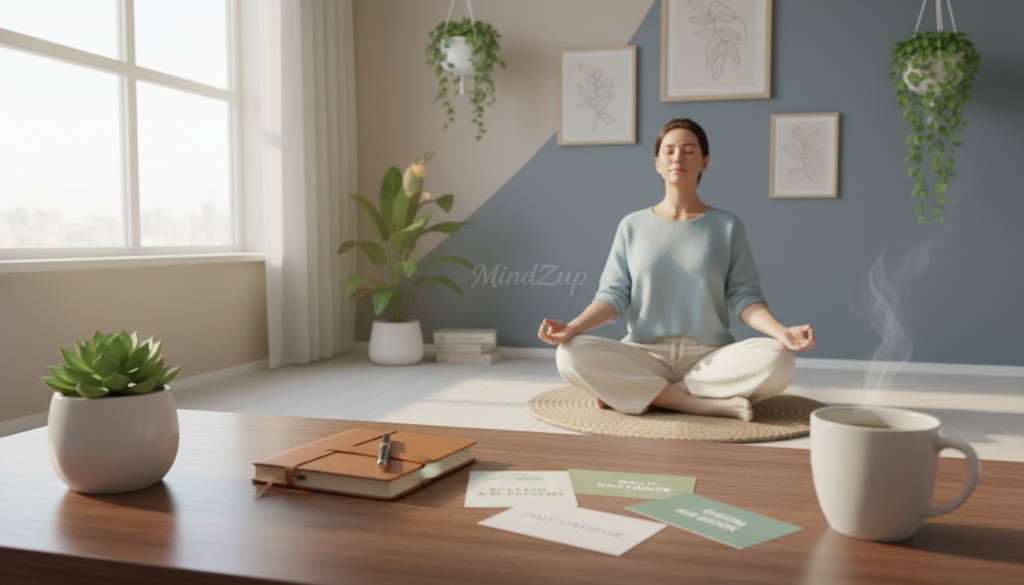
Keeping a journal is a powerful way to stay on track with your daily mindfulness practice. It helps you see patterns in your thoughts and celebrate small wins. Writing down your experiences shows your growth in a real way.
If you like digital tools, there are many apps to help. For example, The Mindfulness App offers over 500 guided meditations. It has a 4.8-star rating from over 7,200 users. These apps give you the structure you need, even when life gets busy.
Finding Community and Support Groups
You don’t have to do this alone. Finding others who practice mindfulness can be a big help. Being part of a community shows that it’s okay to have a wandering mind sometimes.
Sharing your journey with others can make it less stressful. Joining online forums or local meditation groups can offer valuable mindfulness tips. Remember, community support can turn a short-term effort into a lasting habit.
Conclusion
Your journey to a calmer life starts with just one moment of awareness. You don’t need to be perfect to feel the calm of a centered mind. It’s about being consistent, not perfect.
Life can get busy, and you might wonder how to practice mindfulness. The key is to focus on the present moment with one deep breath. Every time you do this, you get better at staying focused and handling emotions.
Remember these mindfulness tips as you go about your day. It’s okay if your mind wanders. The quiet moments you make for yourself each day are where growth happens.
Begin your mindfulness practice today by seeing the world anew. You have the power to create lasting peace and clarity. Your dedication to this path will transform how you see the world.
FAQ
Defining Mindfulness in Your Daily Life
Mindfulness is more than just a buzzword. It’s about being aware of the present moment without judgment. Instead of trying to clear your mind, notice your surroundings and feelings without criticism. Daily mindfulness practice helps you live in the moment, not dwelling on the past or worrying about the future.
The Science Behind Why Mindfulness Works
When you practice mindfulness, you’re changing your brain. Studies show that regular practice strengthens the prefrontal cortex, the part of your brain that helps you focus and manage emotions. By understanding the importance of mindfulness practice, you can improve your memory, reduce stress, and stay calm even when things get tough.
Setting Realistic Expectations for Beginners
Building a mindfulness meditation habit is like training a muscle. It takes patience and consistency. Start with just five minutes a day. Setting achievable goals helps make how do you practice mindfulness fit your lifestyle, not an idealized version.
Creating a Dedicated Space for Your Practice
While you can practice anywhere, having a quiet spot at home helps signal it’s time to focus. Use a specific cushion or the Insight Timer app in the same place every day. This creates a sensory trigger that makes it easier to enter a state of mindfulness meditation.
Mindful Breathing Upon Waking
Your morning sets the tone for the day. Before checking your phone, take three deep, intentional breaths. This simple act anchors you in your body, helping you move from a reactive to a proactive state, bringing calm clarity before the day’s chaos.
Setting Intentions Before Checking Your Phone
Instead of letting Apple News or your inbox set your mood, set a clear intention for the day. Whether it’s to be patient, productive, or kind, practicing mindfulness in these early moments ensures you lead your life with purpose, not just react to external pressures.
The Five-Minute Desk Meditation
You don’t need a mountain retreat to find peace. Mindfulness techniques like the five-minute desk meditation are perfect for busy times. Simply sit upright, close your eyes, and focus on the sensation of your feet on the floor. This quick reset can lower cortisol levels during hectic afternoons.
Practicing Mindful Listening During Meetings
In a professional setting, we often listen to plan our rebuttal. By practicing mindfulness during meetings, you focus entirely on the speaker’s words and tone without judgment. This improves your relationships with colleagues and allows you to respond more thoughtfully to workplace challenges.
Mindful Walking and Sensory Awareness
You can turn a simple walk to your car into a mindfulness exercise. Pay attention to the wind on your face, the sound of your footsteps, and the colors around you. This sensory awareness pulls you out of autopilot and grounds you in the “now.”
Connecting Breath with Movement During Exercise
Whether lifting weights or practicing yoga, matching your breath to your movement transforms exercise into a moving meditation. This connection helps you stay present, prevents injury by keeping you focused on your form, and maximizes the stress-relief benefits of mindfulness practice.
Slowing Down Your Mealtime Experience
Most of us eat while staring at a screen, leading to overeating and poor digestion. By practicing mindfulness at the table, you savor the flavors, textures, and aromas of your food. Removing distractions like your phone turns a routine meal into a nourishing experience.
Identifying Hunger Cues and Emotional Eating
One of the best mindfulness tips for health is learning to distinguish between physical hunger and emotional cravings. By pausing before you reach for a snack, you can ask yourself if you are truly hungry or just bored or stressed. This awareness helps you build a healthier, more conscious relationship with food.
Dealing with a Wandering Mind
It’s a common misconception that practicing mindfulness means having no thoughts. In reality, the “magic” happens the moment you notice your mind has wandered and you gently bring it back. Each time you do this, you are strengthening your mental focus—treat a wandering mind as an opportunity to practice, not a failure.
Managing Frustration When Progress Feels Slow
Some days your daily mindfulness practice will feel deep and peaceful; other days it will feel restless and difficult. Practice self-compassion during the tough sessions. Progress in mindfulness isn’t linear, and showing up even when it feels “unsuccessful” is exactly how you build long-term emotional resilience.
Recognizing Triggers in Real Time
Mindfulness acts as an early warning system for your emotions. By practicing mindfulness, you begin to notice the physical sensations of anger or anxiety—like a tight chest or clenched jaw—before they escalate. This real-time recognition is the first step toward managing intense emotional responses.
Using the Pause Technique to Respond Instead of React
The STOP technique (S-Stop, T-Take a breath, O-Observe, P-Proceed) is one of the most powerful mindfulness techniques for emotional control. It creates a vital space between a stimulus and your response, allowing you to choose a path of calm and clarity rather than being driven by automatic, often regrettable, impulses.
Body Scan Meditation for Stress Relief
A body scan is one of the most effective mindfulness exercises for releasing physical tension. Starting from your toes and moving up to your head, you mentally check in with each part of your body. This practice helps you identify where you are holding stress and consciously breathe into those areas to let it go.
Loving-Kindness Meditation for Empathy
To foster a deeper connection with yourself and others, try Loving-Kindness meditation (Metta). This involves mentally sending well-wishes to yourself, your loved ones, and even people you find difficult. This practice expands your emotional landscape and enhances your overall sense of well-being and empathy.
Tracking Your Progress with a Journal
Writing down your reflections after practicing mindfulness can provide valuable insights into your mental patterns. Use a journal to track how your mood improves over time. Seeing the tangible benefits of mindfulness practice on paper can serve as a powerful motivator to keep going on days when you feel uninspired.
Finding Community and Support Groups
You don’t have to go it alone. Using apps like Headspace or Calm connects you to a global community of practitioners. Joining a local group or an online forum allows you to share your journey and realize that your struggles are a natural part of the process, which lightens the pressure to be perfect in your daily mindfulness practice.
How do you practice mindfulness when you have a very busy schedule?
You can integrate practicing mindfulness into activities you are already doing. Try mindfulness techniques like focusing on the sensation of water on your hands while washing dishes, or practice the STOP technique during your commute. Even one minute of daily mindfulness practice is better than none.
What are the primary benefits of mindfulness practice for mental health?
The benefits of mindfulness practice include reduced symptoms of anxiety and depression, improved concentration, and better sleep quality. By engaging in mindfulness meditation, you strengthen your brain’s ability to stay calm under pressure and recover more quickly from stressful events.
Are there specific mindfulness exercises for beginners?
Yes! Simple mindfulness exercises include the “Five Senses” drill—where you name five things you can see, four you can touch, three you can hear, two you can smell, and one you can taste. This is an excellent way to start practicing mindfulness because it requires no special equipment or long time commitments.
What are some effective mindfulness tips for staying consistent?
One of the best mindfulness tips is to “habit stack.” Pair your mindfulness meditation with an existing habit, such as practicing right after you brush your teeth. Using apps like Headspace or Calm can also provide reminders and guided sessions to keep you on track.
Why is the importance of mindfulness practice emphasized for emotional regulation?
The importance of mindfulness practice lies in its ability to create a “buffer zone” between a provocation and your reaction. This allows you to observe your emotions without being consumed by them, which is essential for building emotional resilience and making better decisions in high-stress situations.
Can I use mindfulness meditation to improve my focus at work?
Absolutely. Using mindfulness techniques like “single-tasking”—focusing on one task at a time with full presence—can significantly boost productivity. Taking short breaks for mindfulness meditation throughout the day helps clear mental clutter and prevents the “brain fog” often associated with multitasking.
How do you practice mindfulness while exercising?
To practice mindfulness meditation while moving, focus on the rhythm of your breath and the physical sensations in your muscles. Avoid distractions like loud music or podcasts occasionally to fully engage with your body’s movements, which is a key part of practicing mindfulness during physical activity.