



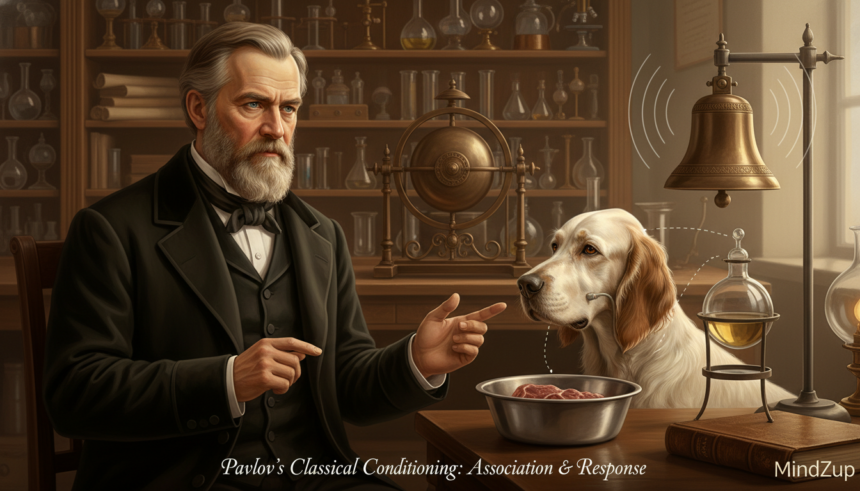
Have you ever wondered why certain sounds or sights trigger memories or emotions? This curiosity is at the heart of a fascinating discovery made by a Russian physiologist in the late 1800s. Ivan Pavlov, while studying digestion in dogs, stumbled upon a remarkable phenomenon that changed our understanding of learning and behavior.
Imagine a dog salivating not just at the sight of food, but at the sound of footsteps approaching. This unexpected reaction led to what we now call classical conditioning. Pavlov’s meticulous research revealed how neutral stimuli can evoke automatic responses, reshaping the landscape of psychology forever.
As you explore this journey into the world of Pavlovian conditioning, you’ll uncover the fundamental principles that govern how we learn through association. You’ll also see how these insights remain relevant today, influencing everything from therapy to marketing.
Key Takeaways
- Discover how Pavlov’s accidental findings transformed psychology.
- Learn about the concept of “psychic secretions” and their significance.
- Understand the rigorous methods Pavlov used in his research.
- Explore the impact of classical conditioning on modern psychology.
- Recognize the relevance of Pavlov’s work in everyday learning.
Introduction: Understanding the Pavlov Experiment and Its Importance
What makes certain stimuli evoke specific responses in both animals and humans? This question lies at the heart of the groundbreaking work conducted by Ivan Pavlov. His research on dog digestion led to a discovery that would forever change the landscape of psychology and learning.
Pavlov’s initial focus was on understanding how dogs digest food. To do this, he developed a method that allowed him to measure the digestive fluids over extended periods. Interestingly, he noticed that the dogs began to salivate not just at the sight of food but also in response to the technician who fed them. This anticipatory salivation was termed “psychic secretion.”
Through careful experimentation, Pavlov introduced a neutral stimulus, such as the sound of a metronome, before presenting food. After several repetitions, the dogs began to salivate at the sound alone. This led him to conclude that a stimulus could become associated with a response, a fundamental concept in classical conditioning.
The significance of the Pavlov experiment cannot be overstated. It marked a shift from introspective methods of studying psychology to a more scientific approach based on observable behavior. You will discover how this shift allowed for measurable and repeatable research, which remains crucial in modern psychology.
Here are some key points to consider:
- The Pavlov experiment is one of the most influential studies in psychology, altering our understanding of learning.
- Before this research, psychology heavily relied on introspection, but Pavlov’s findings emphasized observable behavior.
- Pavlov’s initial hesitance to engage with psychology stemmed from its lack of “exactness,” yet his work provided a rigorous methodology.
- This experiment illustrated how complex behaviors could be simplified into basic stimulus-response units, forming the foundation of behaviorism.
- Pavlov’s discovery of “psychic secretions” showed that the body could learn to anticipate events through environmental cues.
The experimental setup was equally important. Pavlov secured his dogs in isolated environments, using harnesses and surgical tubes attached to their salivary glands for precise measurements. This meticulous approach allowed for the study of learning across various species and contexts, from classrooms to clinics.
In summary, the Pavlov experiment laid the groundwork for understanding a wide range of behaviors, from anxiety and phobias to marketing strategies. It has also influenced neuroscience, where researchers have identified the cellular mechanisms behind associative learning.
The Origins of the Pavlov Experiment: How It All Began
Sometimes, breakthroughs happen when researchers least expect them. In the 1890s, Ivan Petrovich Pavlov, a Russian physiologist, was immersed in studying the physiology of digestion in dogs. His meticulous research would eventually earn him the Nobel Prize in Physiology or Medicine in 1904.
Pavlov’s method involved inserting a small test tube into the cheek of each dog. This allowed him to measure the saliva produced when the dogs were fed a powder made from meat. However, he noticed something intriguing. The dogs began to salivate not only when food was presented but also at the sound of his assistant’s approaching footsteps. This was a pivotal moment in his research.
These anticipatory responses were what Pavlov termed “psychic secretions.” He recognized them as learned responses to incidental stimuli associated with feeding. This realization prompted him to design a controlled experiment to explore whether he could teach a dog to respond to a neutral stimulus, such as a bell or a metronome, which had no natural connection to food.
Pavlov started from the idea that some reflexes, like salivating at the sight of food, are “hard-wired” into dogs. This baseline understanding shaped his approach, emphasizing the need for objective, measurable data over subjective interpretations. His systematic and thorough methods made his research the most influential early study on classical conditioning.
Interestingly, a year before Pavlov’s findings, Edwin Twitmyer published related observations. However, it was Pavlov’s rigorous approach that made his work widely recognized. The origins of this groundbreaking research lie in the intersection of careful observation, scientific curiosity, and the willingness to pursue unexpected findings.
What Is Classical Conditioning? Key Concepts You Should Know
Learning through associations is a fundamental aspect of how we interact with our world. Classical conditioning, also known as Pavlovian conditioning, is a theory of learning that explains how behaviors are acquired through the association between an environmental stimulus and a naturally occurring stimulus.
This process unfolds in three distinct stages: before conditioning, during conditioning, and after conditioning. Let’s explore the key concepts that form the foundation of classical conditioning.
Neutral Stimulus (NS) Explained
The Neutral Stimulus (NS) is a stimulus that initially elicits no relevant response. For example, Pavlov used a metronome or bell, which had no effect on the dog’s salivation before any learning occurred. Over time, with repeated pairings with food, this neutral stimulus becomes significant.
Unconditioned Stimulus (UCS) and Unconditioned Response (UCR)
The Unconditioned Stimulus (UCS) is something that naturally and automatically triggers a response without any prior learning. In Pavlov’s lab, this was the food. The Unconditioned Response (UCR) is the automatic reaction to the UCS. For the dogs, this was the physiological act of salivating when food touched their tongues.
Conditioned Stimulus (CS) and Conditioned Response (CR)
These key concepts are essential for understanding classical conditioning. They form the building blocks for comprehending every application and variation of the theory. You will see how behaviorists like John B. Watson later developed these concepts, emphasizing observable behavior rather than hidden mental states.
As you continue, you will be prepared to apply these concepts as you walk through the step-by-step breakdown of the Pavlov experiment in the next section.
The Pavlov Experiment: Step-by-Step Breakdown
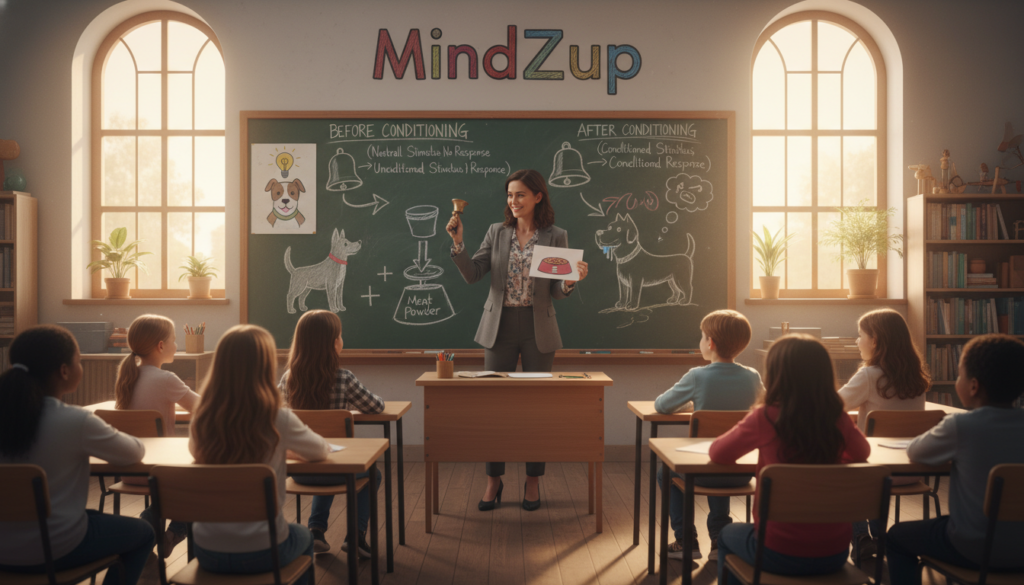
Understanding how behaviors are learned through specific events is essential to grasping classical conditioning. This process unfolds in three distinct stages: before conditioning, during conditioning, and after conditioning. Each stage plays a crucial role in forming the learned responses we observe.
Stage 1: Before Conditioning - Establishing the Baseline
In this initial stage, we identify two unrelated elements:
- Unconditioned Stimulus (UCS): food
- Unconditioned Response (UCR): salivating
- Neutral Stimulus (NS): metronome or bell, which initially has no effect on salivation
The baseline state is as follows:
| Stimulus | Response |
|---|---|
| Unconditioned Stimulus (Food) | Unconditioned Response (Salivate) |
| Neutral Stimulus (Metronome) | No Response |
Stage 2: During Conditioning - The Learning Phase
In this stage, also known as the acquisition phase, Pavlov repeatedly introduced the Neutral Stimulus immediately before presenting the Unconditioned Stimulus. Through temporal contiguity—the closeness in time of the two events—the dog begins to link the sound of the metronome with the arrival of food.
The trial phase can be summarized as:
| Trial Phase | Outcome |
|---|---|
| NS (Metronome) + UCS (Food) | Unconditioned Response (Salivate) |
Stage 3: After Conditioning - The Learned Response
After sufficient pairings, the neutral stimulus loses its neutrality and becomes the Conditioned Stimulus (CS). The dog now salivates upon hearing the metronome alone, even if food is not presented. The conditioned state is represented as:
| Conditioned State | Conditioned Response |
|---|---|
| Conditioned Stimulus (Metronome) | Conditioned Response (Salivation) |
While the Conditioned Response appears similar to the original Unconditioned Response, it is important to note that it is triggered by a learned signal rather than a biological necessity. Pavlov discovered that approximately 20 pairings of the bell and food were needed for dogs to reliably salivate to the bell alone, although the speed of conditioning can vary based on different factors.
This three-stage process is the fundamental template for understanding how all classical conditioning works, from laboratory experiments to real-world applications. You are now ready to explore the key principles behind Pavlovian conditioning that explain why and how this learning process works so effectively.

Key Principles Behind Pavlovian Conditioning
Understanding the underlying principles of how we learn can reveal the intricacies of our behavior. Several key concepts define the process of classical conditioning, shaping how we respond to various stimuli. Let’s explore these principles to better understand the mechanics of learning through associations.
Temporal Contiguity: Why Timing Matters
The principle of temporal contiguity emphasizes that for associations to form, the conditioned stimulus (like a bell) and the unconditioned stimulus (such as food) must be presented close together in time. If the time gap is too large, learning will not occur. This concept, known as the law of temporal contiguity, is fundamental in understanding how associations are created in the brain.
Extinction and Unconditioning: How Responses Fade
Extinction occurs when the conditioned stimulus is repeatedly presented without the unconditioned stimulus. Over time, the conditioned response (like salivation) weakens and eventually disappears. It’s important to note that extinction does not erase the original learning; instead, it involves new learning that inhibits the expression of the conditioned response. This is why spontaneous recovery can occur.
Spontaneous Recovery: When Responses Return Unexpectedly
Spontaneous recovery is a fascinating phenomenon where a previously extinguished conditioned response can briefly reappear after a rest period. This indicates that learned associations, while they can fade, are not completely forgotten. The response may return unexpectedly when the conditioned stimulus is presented again.
Generalization and Discrimination: Responding to Similar Stimuli
Generalization occurs when subjects respond to stimuli that are similar to the original conditioned stimulus. For instance, a dog conditioned to a bell might also salivate at the sound of a buzzer. The strength of the response often follows a generalization gradient, where the response is more pronounced for stimuli closely resembling the original.
On the other hand, discrimination is the ability to respond differently to similar stimuli based on their predictive value. This skill allows individuals to differentiate between stimuli, leading to more refined responses in various contexts.
These principles interact in complex ways, shaping not just laboratory behavior but also real-world learning, from phobias to brand preferences. Understanding these key concepts provides a framework for recognizing both the strengths and limitations of Pavlovian conditioning.
The Pavlov Experiment: Its Role in Shaping Behavioral Psychology
The impact of Ivan Pavlov’s research extends far beyond the drooling of dogs. His work fundamentally transformed psychology from a subjective study of the mind into an objective, experimental science. By focusing on observable, measurable physiological responses, he established a rigorous methodology that remains a cornerstone of modern research.
Before Pavlov’s findings, psychology relied heavily on introspection. This method involved individuals reporting their inner thoughts and feelings, which lacked scientific rigor and replicability. However, Pavlov’s approach demonstrated that observable behavior is key. He showed that complex actions could be reduced to simple stimulus-response units.
Here are some significant points regarding Pavlov’s influence on psychology:
- You will discover how Pavlov’s research fundamentally transformed psychology into an objective, experimental science focused on measurable behavior.
- You will learn that before Pavlov, psychology relied heavily on introspection, which lacked scientific rigor.
- You will understand that Pavlov’s focus on observable responses provided a rigorous methodology that still anchors modern psychological research.
- You will see how his work heavily influenced John B. Watson, who published “Psychology as the Behaviorist Views It” in 1913, advocating for a focus on observable behavior.
- You will explore how this shift launched Behaviorism as the dominant psychological school of the 20th century, shaping research and therapy.
- You will appreciate that Pavlov’s demonstration that complex actions could be reduced to simple stimulus-response units provided a powerful framework for studying learning across species.
- You will learn that Watson and other behaviorists extended Pavlov’s principles to human behavior, emphasizing the role of the environment in shaping personality and behavior.
- You will understand that while behaviorism has since been supplemented by cognitive and biological perspectives, its emphasis on objective measurement remains influential.
- You will recognize that the role of Pavlov’s research in shaping behavioral psychology cannot be overstated—it provided both the theoretical foundation and experimental methodology for scientific psychology.
- You will be ready to explore how these behavioral principles have been applied in real-life settings, particularly in therapy and behavior modification.
Applying Pavlovian Conditioning in Real Life and Therapy
The applications of conditioning in therapy reveal much about human behavior. Pavlovian principles are the active ingredients in several evidence-based treatments used by clinicians today. These techniques harness the power of learning through associations to help individuals overcome various challenges.
Systematic Desensitization and Exposure Therapy
One prominent method is Systematic Desensitization, developed by Joseph Wolpe. This therapy treats phobias by counter-conditioning. Patients learn to pair a feared stimulus, such as a spider, with relaxation techniques. This approach helps break the old fear association, allowing individuals to face their fears gradually.
Exposure Therapy is another effective method, especially for those with PTSD and anxiety. This therapy involves repeatedly presenting the conditioned stimulus, or trigger, without the unconditioned stimulus, which represents danger. Over time, this process leads to the extinction of the fear response.
Aversion Therapy and Behavioral Modification
Aversion Therapy targets maladaptive behaviors, such as alcohol use. In this approach, unpleasant stimuli, like nausea-inducing drugs, are paired with the behavior. This creates a learned avoidance response, helping individuals steer clear of harmful habits.
These therapeutic applications demonstrate that the same principles discovered in dogs can be deliberately harnessed to modify maladaptive behaviors and emotional responses in humans. The success of these therapies relies on key principles such as temporal contiguity, extinction, and counter-conditioning that were identified over a century ago.
Importantly, these treatments are not just theoretical. They are empirically supported, evidence-based interventions that have helped countless individuals overcome debilitating fears and addictions. The application of Pavlovian conditioning in therapy represents one of the most direct and beneficial translations of basic research into clinical practice.
As you explore these therapeutic techniques, you’ll see how they continue to evolve. New insights from neuroscience and cognitive psychology are being integrated while remaining grounded in Pavlovian principles. This ongoing development enhances our understanding of how conditioning shapes emotional responses more broadly.
Understanding Emotional Responses Through Conditioning: The Little Albert Experiment
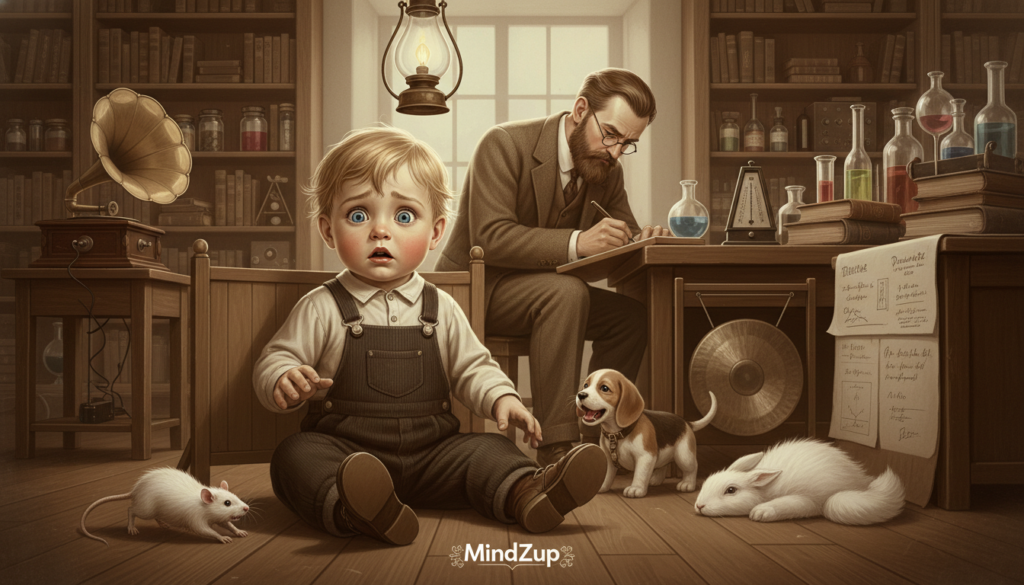
What factors contribute to the way we emotionally respond to certain stimuli? In 1920, John B. Watson and Rosalie Rayner conducted a significant study that applied the principles of classical conditioning to a human infant, known as Little Albert. This controversial experiment aimed to explore how fear could be conditioned in humans.
Watson and Rayner paired a neutral stimulus, a white rat, with a loud, frightening noise (the unconditioned stimulus). As a result, Little Albert developed a conditioned emotional response, leading him to fear not only the rat but also other similar stimuli, including a rabbit, a dog, and even a Santa Claus mask. This phenomenon is known as generalization.
The significance of this experiment is profound. It demonstrated that emotions like fear are learned through environmental associations rather than arising from deep-seated unconscious conflicts, as suggested by Freud. Watson and Rayner’s research showed how easily fear can be conditioned, providing a clearer understanding of emotional responses.
However, ethical concerns arose from this study. Watson and Rayner did not remove Albert’s fear after the experiment, leaving the long-term effects on his well-being unclear. Today, this experiment would be considered unethical due to the potential for psychological harm and the lack of informed consent.
Despite its ethical failings, the Little Albert experiment offered compelling evidence for the role of conditioning in developing human emotional responses. It paved the way for further research on fear and anxiety conditioning, influencing our understanding of phobias and post-traumatic stress disorder.
Moreover, the ethical lessons learned from the Little Albert experiment have shaped modern research practices, emphasizing the importance of protecting participants from harm. As you delve deeper into this topic, you will also explore how evolution has influenced our capacity for conditioning, illustrated by research on biological preparedness and taste aversion.
Biological Preparedness and Taste Aversion: Evolution Meets Learning
Did you know that our evolutionary history shapes how we respond to different stimuli? This concept is crucial for understanding classical conditioning and its nuances. One of the most fascinating examples is the Garcia Effect, also known as taste aversion.
John Garcia discovered that organisms can learn to avoid specific foods after just one instance of sickness. Imagine eating a particular dish and later feeling nauseous. You might never want to eat that food again, even if the illness had nothing to do with it. This aversion can develop even if the sickness occurs hours after eating, challenging the traditional rules of conditioning.
Garcia’s research revealed that while Pavlov suggested that the conditioned stimulus (CS) and unconditioned stimulus (UCS) must occur close together in time, taste aversion can form with significant delays. This means that a single exposure can create a lasting aversion, which contradicts the idea that repeated pairings are necessary.
Another key aspect is biological preparedness. Researchers like Martin Seligman proposed that both animals and humans are evolutionarily predisposed to fear certain stimuli that threaten survival. For instance, you are more likely to develop a fear of snakes or heights than of harmless objects like flowers or electrical outlets. This insight challenges the notion that all stimuli can become conditioned equally.
Understanding taste aversion highlights its critical survival function. By quickly learning to avoid foods that cause illness, organisms protect themselves from potential poisoning. The Garcia Effect has been demonstrated across various species, from rats to humans, explaining why a single bad experience with food can lead to a lifelong aversion.
In summary, biological preparedness and taste aversion reveal how evolution has shaped the learning mechanisms first described in classical conditioning. These findings expand our understanding beyond simple stimulus-response associations to include the role of evolutionary history in learning. As you continue, you will delve into the neuroscience of conditioning, exploring what happens in your brain when these associations are formed.
The Neuroscience of Conditioning: What Happens in Your Brain
What happens in your brain when you learn to associate certain stimuli with fear? Understanding the neuroscience behind conditioning reveals how our brains process these connections. This section will explore key brain structures and mechanisms that underpin these learned behaviors.
The Amygdala and Fear Conditioning
The amygdala is a crucial brain region involved in forming and retrieving fear memories. According to research by Joseph LeDoux (2015), this structure quickly links neutral stimuli with threatening events. This rapid connection creates automatic emotional responses.
LeDoux (1996) identified two distinct pathways for fear processing:
- A fast route from the thalamus to the amygdala, allowing for quick reactions.
- A slower route that goes through the cortex, enabling more thoughtful processing.
This dual-route system explains why you might feel fear before consciously recognizing the source of that fear. Your amygdala has already reacted, setting off an emotional response.
Long-Term Potentiation and Neural Mechanisms
Long-Term Potentiation (LTP) is a cellular process identified by neuroscientists like Eric Kandel. This process, often summarized as “neurons that fire together, wire together,” provides physical evidence for the principles of classical conditioning.
LTP strengthens the synaptic connections between neurons that are repeatedly activated together. This creates the neural basis for the associations formed during conditioning.
Moreover, the fascinating field of psychoneuroimmunology reveals even more about conditioning. Ader and Cohen (1975) demonstrated that the immune system can also be conditioned. In their experiment, rats that received saccharin water paired with an immunosuppressive drug eventually showed suppressed immune responses to the saccharin water alone.
This research illustrates that conditioning is not limited to behavioral responses; it can also influence physiological processes. Understanding these neural mechanisms shows that the behavioral observations made by early researchers are grounded in measurable changes in brain structure and function.
As modern neuroscience continues to evolve, techniques like fMRI are being used to observe the brain in action during learning. These advancements enhance our understanding of how conditioning works and how these principles can be applied in various fields, including marketing and education.
How the Pavlov Experiment Influences Modern Marketing and Education
Isn’t it fascinating how specific sounds or visuals can shape your preferences? The principles discovered in classical conditioning are alive and well in today’s marketing and education. Advertisers and educators alike utilize these concepts to create meaningful associations that influence behavior.
In marketing, brands often pair their products with unconditioned stimuli, such as catchy music or attractive visuals. This strategy aims to elicit a positive emotional response toward the brand. For instance, when you hear a jingle associated with a product, it can evoke feelings of happiness or nostalgia, making you more likely to choose that brand in the future.
Similarly, in education, strategies like rote memorization and repetitive learning leverage the association between cues and responses. When students repeatedly answer questions after hearing specific prompts, they reinforce their memory. This method helps solidify knowledge and improve recall.
Modern learning theories, such as the Rescorla-Wagner model, explain how our brains constantly calculate prediction errors. This means your brain updates its understanding based on the difference between what you expect and what actually happens. This ongoing process is crucial for effective learning.
Evaluative conditioning is another interesting aspect of classical conditioning. It involves changing your liking of a stimulus simply because it has been paired with something positive or negative. A classic example is the 1958 experiment by Staats and Staats, where participants rated nationality names more pleasant when paired with positive words like “gift” and “happy.”
Here are some key takeaways:
- You will discover how Pavlov’s principles are actively used in modern marketing.
- You will learn about evaluative conditioning and its impact on preferences.
- You will explore the Staats and Staats experiment that illustrates evaluative conditioning.
- You will understand how educational strategies use Pavlovian principles to enhance learning.
- You will see how the predictive brain concept helps update your understanding of the world.
- You will recognize the emotional connections formed through branding and advertising.
- You will appreciate how marketers and educators can shape behavior and attitudes intentionally.
- You will learn that the same principles that made dogs salivate can influence your choices in everyday life.
- You will understand the pervasive influence of classical conditioning in your daily experiences.
| Application | Description |
|---|---|
| Marketing | Using unconditioned stimuli to create positive emotional responses toward brands. |
| Education | Employing rote memorization to build associations between cues and responses. |
| Evaluative Conditioning | Changing preferences through pairing stimuli with positive or negative associations. |
Ultimately, the influence of classical conditioning extends far beyond the laboratory. It permeates the commercial and educational landscapes you navigate daily. By understanding these principles, you can better appreciate how your environment shapes your choices and learning experiences.
Classroom Examples: Using Pavlovian Conditioning to Support Learning
Classrooms are dynamic spaces where learners naturally form associations between stimuli and their emotional responses. This process of conditioning happens in every classroom, whether teachers plan for it or not. Learners create automatic links between their surroundings and their feelings or actions. Understanding this can help educators harness these principles for effective teaching.
Building Positive Routines and Reducing Anxiety
To create a supportive learning environment, you can build positive routines. Consistently pairing neutral stimuli, like a specific song or phrase, with engaging activities can foster excitement and readiness among students. This approach creates conditioned responses that promote a positive atmosphere.
Counter-Conditioning for Test Anxiety and Fear
Test anxiety is a common conditioned response where learners associate assessments with failure. You can use counter-conditioning to help reverse this negative association. Techniques such as low-stakes retrieval practice, calming music, and breathing exercises can create a relaxed testing environment. Pairing these positive actions with tests can significantly reduce anxiety.
Avoiding Unintended Negative Conditioning in Classrooms
Be aware of unintended negative conditioning, where teachers may unknowingly create negative associations. For example, pairing challenging subjects with a stern voice or time pressure can lead to anxiety. Mathematics anxiety, reading-aloud fear, and test-taking panic often develop through these pathways. It’s essential to recognize these triggers and strive for a supportive classroom environment.
Remember, extinction does not erase learning. A conditioned response that seems to have disappeared can return spontaneously. Therefore, actively maintaining positive associations is crucial. Consistency is key; cues must reliably predict what comes next for conditioning to be effective. By creating predictable and supportive routines, you can help students thrive.
Critical Evaluation: Limitations and Challenges of Pavlov's Theory
What challenges arise when applying the principles of conditioning outside of controlled settings? While Pavlov’s work laid the groundwork for understanding learning, several limitations warrant examination.
Artificial Settings and Ecological Validity
Pavlov’s experiments were conducted in highly controlled laboratory environments, such as soundproof rooms and harnesses. Critics argue that these artificial settings lack ecological validity. This means the findings may not perfectly translate to the messy, uncontrolled variables of the real world.
Instinctive Drift and Biological Constraints
Another limitation is the phenomenon of instinctive drift. Research by the Brelands demonstrated that animals can revert to their instinctive behaviors, overriding their conditioning. For instance, raccoons conditioned to drop coins into a box eventually began rubbing them together, displaying a washing behavior instead. This illustrates that biological instincts can inhibit or override conditioned behaviors.
Prediction vs. Simple Contiguity in Conditioning
Pavlov believed that conditioning occurred simply because the conditioned stimulus (CS) and unconditioned stimulus (UCS) were paired close together in time. However, later research by Rescorla and Wagner revealed that prediction and expectation are more critical than mere pairing. If a stimulus does not provide new information or reliably predict the outcome, known as “blocking,” conditioning does not occur. This suggests a cognitive calculation rather than a simple mechanical association.
These limitations do not invalidate Pavlov’s contributions. Instead, they refine and extend our understanding of how learning works. The critical evaluation of his theory has led to more sophisticated models that incorporate cognitive and biological factors. As science progresses, each limitation reveals new avenues for research and theory development.
Modern Perspectives on Pavlovian Conditioning and Learning Models
What if the principles of conditioning have evolved to encompass more than just simple stimulus-response relationships? In the realm of psychology, contemporary theories are reshaping our understanding of how learning occurs. This section explores various modern perspectives on Pavlovian conditioning, including functional and informational viewpoints, as well as the innovative HeiDI model.
The Functional Perspective: Evolutionary and Ecological Adaptations
The functional perspective argues that conditioning evolved to serve adaptive functions in the natural world. Traditional laboratory studies often utilize arbitrary stimuli, like a bell. However, as Domjan (2005) suggests, conditioned stimuli are rarely arbitrary in nature. Instead, they often act as precursors or features of the unconditioned stimulus itself. For example, the scent of prey may signal an impending attack, or the taste of a plant might precede illness.
This perspective emphasizes that conditioning is not merely about mimicking a reflex. It prepares organisms for biological events, often producing compensatory responses that enable more effective coping with upcoming stimuli.
The Informational Perspective: Contingency and Predictive Value
Delving deeper, the informational perspective, championed by Rescorla (1988), challenges the notion that mere pairing creates learning. Instead, it posits that conditioning is about contingency and information. Organisms do not simply link two stimuli; they build complex mental maps of their environment. Conditioning occurs only if the conditioned stimulus provides reliable information about the unconditioned stimulus.
The HeiDI Model: A Contemporary Framework for Conditioning
To address the limitations of older models, such as Rescorla-Wagner, the HeiDI model was developed by Honey, Dwyer, and Iliescu (2020, 2022). This model allows for reciprocal, bidirectional associations between conditioned and unconditioned stimuli, moving beyond one-way links. HeiDI integrates various conditioning phenomena while retaining key insights from traditional models.
Modern perspectives on Pavlovian conditioning reveal it to be a sophisticated information-processing system rather than a simple stimulus-response mechanism. Understanding these advancements helps you appreciate the complexities of learning and the factors that influence it.
Conditioning Timing Parameters: How Timing Affects Learning
Timing plays a crucial role in how effectively we learn through conditioning. The relationship between the conditioned stimulus (CS) and the unconditioned stimulus (US) is fundamental in determining the speed and strength of learning. Let’s explore the different timing parameters that influence this process.
Delay, Trace, and Backward Conditioning Explained
In forward conditioning, learning is fastest when the CS precedes the US. This setup signals that the US will follow. Two common forms of forward conditioning are:
- Delay Conditioning: In this method, the CS is presented and overlaps with the US. For example, if you hear a buzzer for five seconds while air is puffed into your eye, you will blink. After several pairings, you will blink at the sound of the buzzer alone.
- Trace Conditioning: Here, the CS begins and ends before the US is presented. This requires you to maintain a “memory trace” of the CS during the stimulus-free interval.
On the other hand, there are less effective methods of conditioning:
- Backward Conditioning: This occurs when the US precedes the CS. The conditioned response tends to be inhibitory, signaling that the US has ended rather than indicating its arrival.
- Simultaneous Conditioning: In this case, both the CS and US are presented and terminated at the same time, which can dilute the effectiveness of the learning.
- Temporal Conditioning: This involves presenting the US at regular intervals, leading the organism to anticipate the US shortly before it occurs.
Understanding these timing parameters is essential for effective teaching and therapeutic interventions. They have practical implications in any situation where you want to establish or modify learned associations.
Research has shown that the effectiveness of different timing parameters reflects the underlying neural mechanisms of learning. For instance, the amygdala plays a crucial role in emotional responses, while long-term potentiation strengthens synaptic connections during conditioning.
Pavlov meticulously documented these timing effects, finding that learning occurred most rapidly when the interval between the CS and US was relatively short. By grasping these principles, you can intentionally design conditioning procedures that maximize learning efficiency.
Conclusion: What You Should Take Away from the Pavlov Experiment
What if your everyday interactions are quietly influencing your responses to the world around you? The essence of Ivan Pavlov’s research lies in demonstrating how a neutral stimulus, like a bell, can trigger a reflexive response, such as salivation, through repeated pairings with food.
The Pavlovian response is a fundamental mechanism of learning that operates in your daily life. This research transformed psychology from a subjective study into an objective science, establishing the principles of classical conditioning that influence therapy, education, and marketing today.
While there are limitations to Pavlov’s theory, including biological constraints and the importance of prediction, these critiques refine our understanding rather than invalidate it. Modern perspectives reveal that conditioning is a sophisticated process shaped by evolution, impacting your preferences, fears, and habits.
Ultimately, recognizing these processes empowers you to harness them for positive change in your life. The legacy of Pavlov’s discovery continues to evolve, influencing new research in various fields.
FAQ
What is the Pavlov experiment?
The Pavlov experiment refers to a series of studies conducted by Ivan Pavlov that demonstrated the principles of classical conditioning. It involved pairing a neutral stimulus, like a bell, with an unconditioned stimulus, such as food, to elicit a conditioned response, like salivation in dogs.
How does classical conditioning work?
Classical conditioning works by creating associations between a neutral stimulus and an unconditioned stimulus. Over time, the neutral stimulus becomes a conditioned stimulus that triggers a conditioned response, even in the absence of the unconditioned stimulus.
What are some real-life applications of Pavlovian conditioning?
Pavlovian conditioning is applied in various fields, including therapy, education, and marketing. Techniques like systematic desensitization help individuals overcome fears, while marketers use conditioning to create positive associations with products.
What is extinction in classical conditioning?
Extinction occurs when the conditioned response diminishes or disappears after the conditioned stimulus is presented without the unconditioned stimulus for a period. This process illustrates how learned behaviors can fade over time.
Can classical conditioning explain emotional responses?
Yes, classical conditioning can explain emotional responses. For instance, a person may develop a fear response to a specific cue if it has been paired with a traumatic event, demonstrating how emotions can be conditioned.
What is the difference between generalization and discrimination in conditioning?
Generalization occurs when a conditioned response is triggered by stimuli similar to the conditioned stimulus, while discrimination involves the ability to differentiate between similar stimuli and respond only to the specific conditioned stimulus.
How does timing affect classical conditioning?
Timing is crucial in classical conditioning. The temporal contiguity principle states that the closer in time the neutral stimulus and unconditioned stimulus are presented, the stronger the association will be formed.
What role does the amygdala play in conditioning?
The amygdala is essential for processing emotions and fear responses. It plays a significant role in fear conditioning, helping to form and retrieve memories associated with fearful stimuli.
How can teachers use Pavlovian conditioning in the classroom?
Teachers can use Pavlovian conditioning to build positive routines and reduce anxiety among students. Techniques like counter-conditioning can help students overcome test anxiety by creating positive associations with the testing environment.
What are some limitations of Pavlov’s theory?
Limitations of Pavlov’s theory include its reliance on artificial settings, which may not reflect real-world scenarios. Additionally, instinctive drift and biological constraints can affect the learning process, highlighting the complexity of behavior.